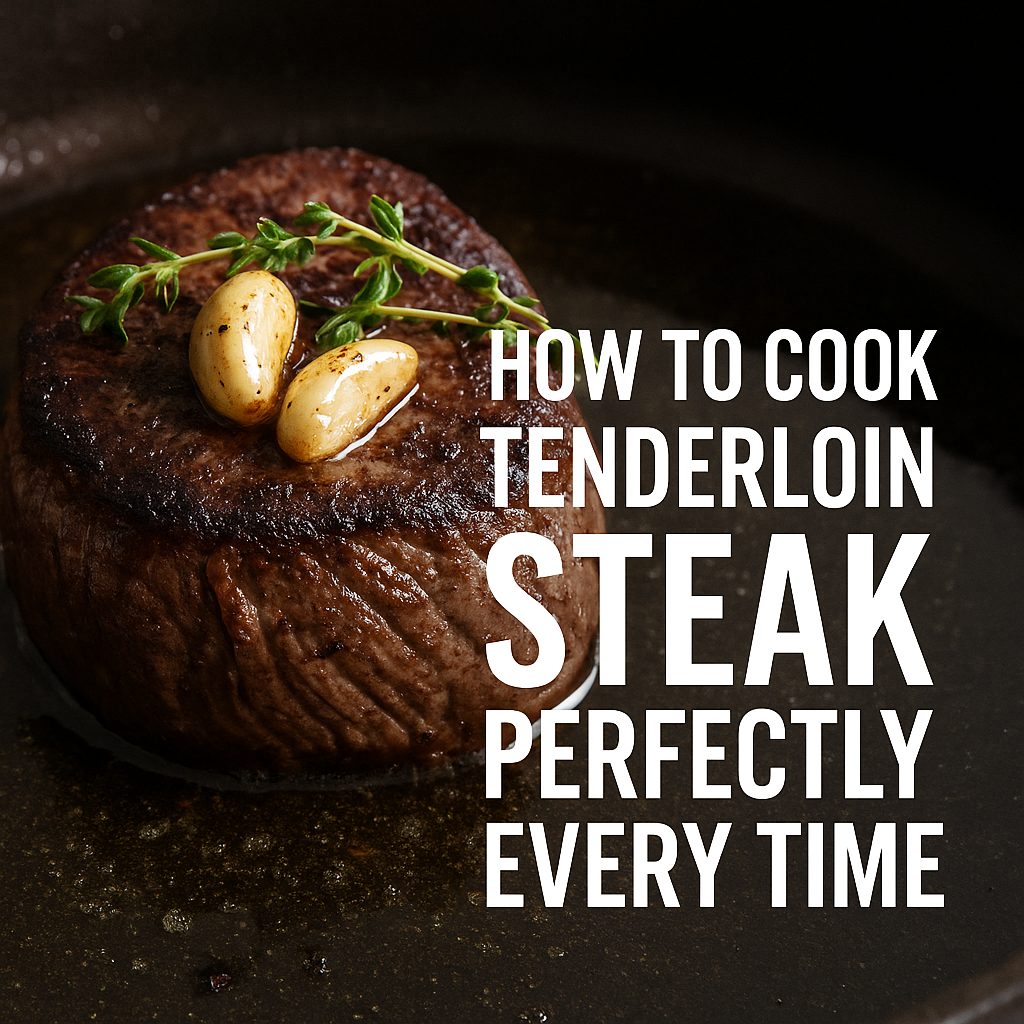


If you’re a steak lover, you know that nothing beats a perfectly cooked tenderloin steak. Juicy center, golden crust, all the flavor. Learning how to cook tenderloin steak at home is a skill every meat lover should have in their back pocket.
Tenderloin has a reputation for being a little fussy, but it really comes down to three things: good ingredients, high heat, and not rushing the process. With the right technique and a bit of practice, you can make restaurant-quality tenderloin steak in your own kitchen.
In this post, you’ll learn:
Easy sauces and toppings that make it feel special
How to choose and prep tenderloin steak
Exactly how to cook tenderloin on the stove (plus a grilling option)
How to know when your steak is done
The right way to rest, slice, and serve
Ingredients You’ll Need
A great steak dinner starts with simple, good ingredients. You don’t need much, but quality really shows here.
Steak
2 tenderloin steaks, about 1 inch thick
Look for bright red meat with fine marbling
If you can, choose Prime, grass-fed, or American Wagyu for extra tenderness and flavor
Seasoning
Salt (preferably kosher or sea salt)
Freshly ground black pepper
That’s it for the base. Simple seasoning lets the natural flavor of the steak shine.
For cooking
Olive Oil
(or another high-heat oil you like)
Optional Ingredients

Use these if you want to dress things up a bit:
- 2–3 garlic cloves, lightly crushed
- 2–3 tablespoons butter
- Fresh thyme, rosemary, or parsley
These extras are perfect for basting the steak in the pan and adding a buttery, aromatic finish.
Step One: Prep Your Tenderloin Steak
The road to a juicy steak starts before it ever hits the heat.
- Bring steak to room temperature
Take the steaks out of the fridge about 30 minutes before cooking.- This helps them cook more evenly.
- A very cold steak tends to be overdone on the outside and underdone in the middle.
- Pat dry
Use paper towels to pat both sides of the steak dry.- Dry surfaces brown better and give you that golden crust.
- Lightly oil the steak (optional but helpful)
Rub a thin layer of olive oil directly onto the steak.- This helps prevent sticking.
- It also helps the seasoning cling better.
- Season generously
Season both sides with salt and pepper.- Don’t be shy. Some of the seasoning will stay in the pan.
- If you’re using a seasoning blend, keep it simple so you don’t drown out the flavor of the beef.
- Set up your cooking station
Before you start cooking, have everything ready beside you:- Skillet or grill preheating
- Butter, garlic, herbs (if using)
- Tongs, meat thermometer, and a plate or board for resting
A tiny bit of prep up front makes the actual cooking feel relaxed instead of rushed.
Choosing the Right Cooking Equipment
Tenderloin steak does best with high, direct heat. You can cook it either on the stove or on the grill.
For stove-top cooking
Choose:
- A heavy-bottomed skillet or
- A cast-iron pan
Why it matters:
- Heavy pans hold heat well and cook the steak more evenly.
- Cast iron is especially great because you can sear on the stove and finish in the oven if needed.
For grilling
If you prefer that smoky, grilled flavor:
- Make sure the grill grates are clean
- Preheat to high heat (you want the grill very hot before the steak goes on)
Charcoal grills add smokiness, while gas grills give you more control. Both work well for tenderloin.
How to Cook Your Tenderloin Steak on the Stove
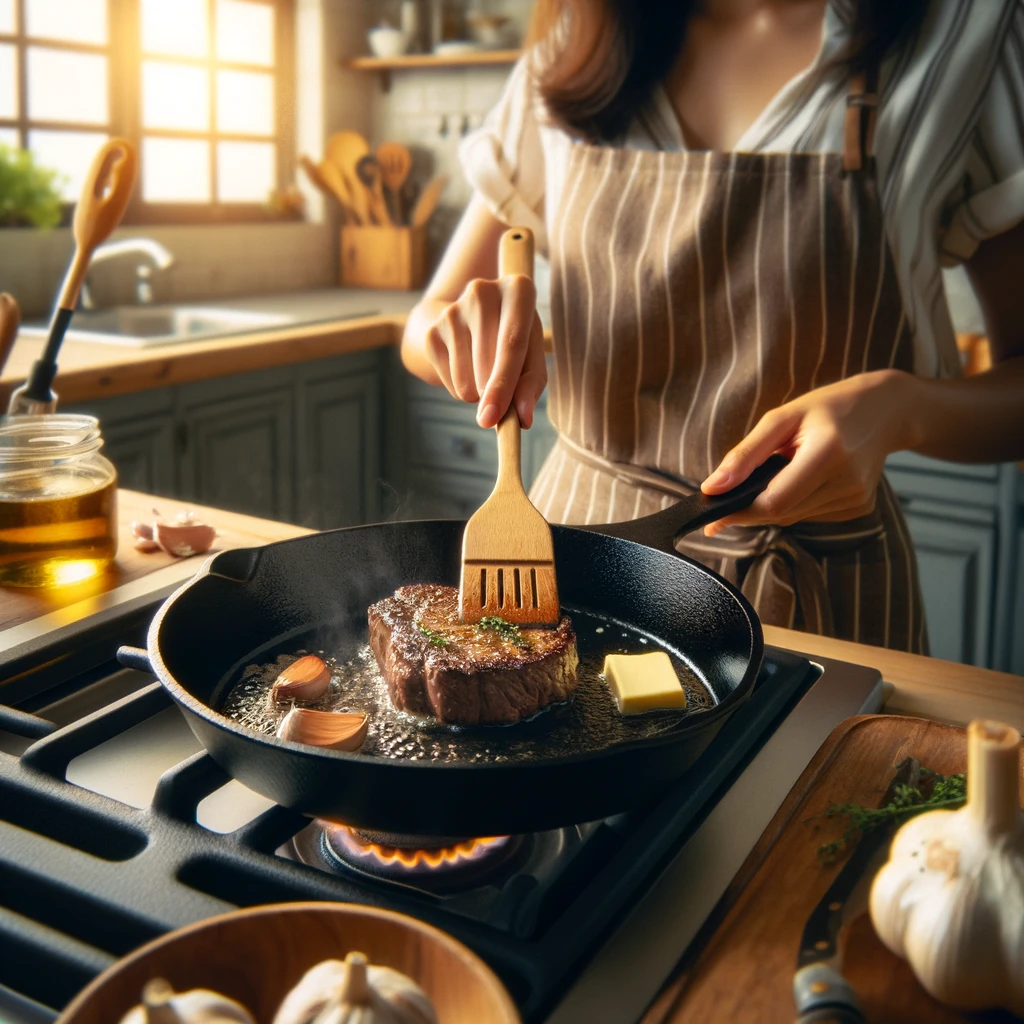
This method gives you a deep, flavorful crust and a tender, juicy center.
Tent loosely with foil and let them rest (details below).
Preheat the pan
Place your skillet over medium-high heat.
Let it heat for a few minutes until it’s very hot.
Add a thin layer of olive oil to coat the bottom.
Add the steaks
When the oil is shimmering (but not smoking), carefully lay the steaks in the pan.
You should hear an immediate sizzle.
Sear without moving
Let the steaks cook 3–4 minutes on the first side without touching them.
This undisturbed sear builds that beautiful brown crust.
Flip the steak
Use tongs to flip the steak.
If it resists or sticks, give it another 30 seconds. When a crust has formed, it will release easily.
Add butter and aromatics (optional but amazing)
Reduce heat slightly.
Add butter, crushed garlic, and herbs to the pan.
Tilt the pan and use a spoon to baste the steak with the melted butter for extra flavor.
Cook to your desired doneness
For a 1-inch tenderloin, approximate times after the flip:
- Medium-rare: 3–4 minutes
- Medium: 4–5 minutes
- Well done: 6–7 minutes (though tenderloin is best kept on the medium-rare to medium side)
Rare: 120–125°F
Medium-rare: 130–135°F
Medium: 135–145°F
Medium-well: 145–150°F
Transfer to rest
Move the steaks to a warm plate or cutting board.
How to Grill Tenderloin Steak

If you love grill marks and a hint of smoke, this method is for you.
Use a thermometer if you have one, then transfer the steaks to a plate and let them rest.
Preheat the grill
Heat your grill to high. You want it hot enough that you can only hold your hand above the grates for 1–2 seconds.
Oil and season
Brush the steaks lightly with olive oil if you didn’t already.
Season with salt and pepper.
Grill the steaks
Place steaks on the hottest part of the grill.
Close the lid and cook 4–5 minutes per side for medium-rare, depending on thickness.
For medium, aim for about 6–7 minutes per side.
For well done, around 8–9 minutes per side.
Avoid pressing or flipping too often
Don’t press the steak with a spatula; it squeezes out the juices.
Flip only once if possible.
Optional flavor boost
If using charcoal, you can add wood chips or herbs to the coals for subtle extra flavor.
Check doneness and rest
Why Resting Your Steak Matters
Resting is the quiet little step that makes a huge difference.
While the steak cooks, the juices are pushed toward the outside. If you cut into it right away, those juices run straight onto your cutting board.
To rest properly:
- Remove from heat
- Place the cooked steak on a warm plate or cutting board.
- Tent loosely with foil
- Cover lightly so it stays warm but doesn’t steam and soften the crust.
- Rest for 5–10 minutes
- Thinner steaks: closer to 5 minutes
- Thicker steaks: closer to 10 minutes
This short pause lets the juices redistribute so every bite is moist and flavorful.
How to Slice and Serve Tenderloin Steak
Once your steak has rested, you’re ready for the final steps.
Slice against the grain
- Look for the direction of the muscle fibers (they run in lines).
- Slice across those lines, not with them.
- This shortens the fibers and makes each bite more tender.
You can serve the steaks whole or sliced into thick medallions.
Serving ideas
Serve your tenderloin steak with:
- Garlic mashed potatoes or creamy polenta
- Roasted asparagus, green beans, or Brussels sprouts
- A simple green salad with vinaigrette
Finish with:
A spoonful of pan juices or melted compound butter
A sprinkle of flaky sea salt
A few sprigs of fresh herbs
Easy Ways to Add Extra Flavor
Tenderloin has a mild, buttery flavor that pairs well with both simple and bold toppings.
Try one of these:
- Garlic herb butter
- Mix softened butter with minced garlic, chopped parsley or thyme, salt, and pepper.
- Place a small pat on the hot steak right before serving.
- Blue cheese butter
- Combine softened butter with crumbled blue cheese and chives.
- Adds a creamy, tangy kick.
- Balsamic drizzle
- Reduce balsamic vinegar in a small pan until slightly syrupy.
- Drizzle lightly over the sliced steak.
- Smoky seasoning
- A pinch of smoked paprika, sea salt, and black pepper can add a warm, smoky note without overpowering the meat.
Use these add-ons to match your mood or the rest of your menu.
Troubleshooting Common Steak Mistakes
If your steak hasn’t been turning out the way you hoped, one of these might be the culprit:
- Uneven cooking
- Likely from cooking straight from the fridge.
- Fix: Always let steaks sit at room temperature for about 30 minutes.
- Weak crust, pale color
- The pan or grill wasn’t hot enough.
- Fix: Preheat longer and make sure the surface is very hot before adding the steak.
- Steak sticking to the pan or grill
- It hasn’t developed a crust yet.
- Fix: Give it another minute or so. Once a crust forms, it will release more easily.
- Too salty or overpowering seasoning
- Over-seasoning can hide the flavor of the meat.
- Fix: Stick with salt and pepper, and taste before adding extra blends.
- Dry steak
- Often from overcooking or skipping the resting step.
- Fix: Use a thermometer and always rest your steak.
Pairing Wine with Tenderloin Steak

A good glass of wine can turn your steak dinner into a little occasion.
Some classic pairings:
Cabernet Sauvignon
Deep fruit flavors, structured, and great with richer cuts of beef.
Merlot
Softer and smoother, with a subtle sweetness that plays nicely with the savory steak.
Shiraz
Often has peppery notes that echo the seasoning on your steak.
Choose your wine based on how you’ve seasoned and served the steak. Bold sauces and blue cheese pair well with bigger wines, while simpler preparations can match nicely with softer reds.
How to Cook Tenderloin Steak Perfectly Every Time
Equipment
- Tongs
- Instant-read meat thermometer
- Small heatproof spoon (for basting)
- Cutting board
- Sharp chef’s knife
- Small mixing bowl or shallow dish (for seasoning)
- Paper towels
- Aluminum foil
Ingredients
Ingredient Group 1
- 2 beef tenderloin steaks about 1 inch thick
- 1 –2 tablespoons olive oil plus a little extra if needed
- 1 –1½ teaspoons kosher salt divided between both steaks
- ¾ teaspoon freshly ground black pepper
Ingredient Group 2
- Optional Butter Baste
- 2 tablespoons unsalted butter
- 2 –3 garlic cloves lightly crushed
- 2 –3 sprigs fresh thyme or rosemary
Ingredient Group 3
- To Serve Optional
- Flaky sea salt
- Fresh parsley thyme, or rosemary, chopped
- Lemon wedge or simple pan juices if desired
Instructions
Bring steaks to room temperature
- Remove the steaks from the fridge about 30 minutes before cooking. Pat them dry with paper towels to remove excess moisture.
Season the steaks
- Rub the steaks lightly with olive oil. Season both sides generously with kosher salt and black pepper. Set aside while you heat the pan.
Preheat the pan
- Place a heavy-bottomed skillet or cast-iron pan over medium-high heat. When hot, add just enough olive oil to lightly coat the bottom of the pan. The oil should shimmer but not smoke.
Sear the first side
- Carefully lay the steaks in the hot pan. You should hear a strong sizzle. Cook for 3–4 minutes without moving the steaks so a deep brown crust can form.
Flip and add butter & aromatics (optional)
- Flip the steaks with tongs. Add the butter, crushed garlic, and fresh herbs to the pan. As the butter melts and foams, tilt the pan and spoon the butter over the steaks for 1–2 minutes.
Cook to desired doneness
- Continue cooking the second side for another 3–4 minutes for medium-rare, or until the steaks reach your preferred doneness:
Rare: 120–125°F (49–52°C)
Medium-rare: 130–135°F (54–57°C)
Medium: 135–145°F (57–63°C)
- Use an instant-read thermometer in the center of the steak for best accuracy.
- Rest the steaks
- Transfer the steaks to a warm plate or cutting board. Tent loosely with foil and let rest for 5–10 minutes so the juices redistribute.
- Slice and serve
- Slice against the grain into thick medallions or serve whole. Spoon any pan juices over the top, finish with flaky sea salt and fresh herbs, and serve right away.
Nutrition (Per Serving – Estimated)
- Calories: ~540
- Protein: ~40 g
- Fat: ~42 g
- Carbohydrates: 0 g
- Fiber: 0 g
- Sugar: 0 g
- Saturated Fat: ~18 g
- Cholesterol: ~145 mg
- Sodium: depends heavily on how much salt you use, but estimate ~800–900 mg
- Nutrition values are estimates only and will vary based on the exact size of the steaks, how much oil and butter you use, and how generously you season with salt.
Notes
Related Articles:
Conquer the Grill: How to Grill Filet Mignon Perfectly Every Time
Soft Shell Crab 101: Buy, Clean, Cook, and Eat Like a Pro
As an Amazon Associate, I earn commission from qualifying purchases.